

QUT Students Find a Live Classroom at UniSport Nationals Athletics
For 34 Queensland University of Technology (QUT) students, the 2026 ...
UniSport Nationals Athletics remains, at its core, a university competition. It is built on team pride, student representation, and the unique experience of competing alongside university peers. That hasn’t changed.
What has changed is what now sits alongside it.
Across three days on the Gold Coast, the 2026 championships again demonstrated how the event has evolved, from a standalone university competition into one that, for some athletes, now forms part of a broader high-performance pathway. With 38 of UniSport’s 40 member universities represented, the depth and reach of the competition continues to strengthen.
That evolution is being shaped in part, by the continued alignment with Athletics Australia. The timing of the event, the standard of officiating, and the presence of qualification opportunities have created conditions where performance outcomes now extend beyond the competition itself.
“Right now is one of the most exciting periods for athletics in Australia,” said Brian Roe, Family Relations and Athlete Liaison at Athletics Australia, “and our partnership with UniSport has played an important role in that. The championships provide a genuine springboard into national teams for emerging athletes.”
For Roman Anastasios (The University of Melbourne), that balance between university sport and high performance is exactly what makes the event distinctive. “It’s quietly my favourite competition on the calendar,” he said. “I’ve PB’d both times I’ve competed here. But beyond that, it gave me the opportunity to travel for sport and make connections that are some of the most important to me today.”
Returning in 2026 as part of his Commonwealth Games preparation, Anastasios narrowly missed the qualifying height but was still awarded his Australian representative bib, recognition that reflects both his performance level and the standard of competition.
Importantly, his experience highlights a cohort often overlooked within traditional high-performance pathways, student-athletes balancing elite competition with academic commitments.
While Athletics Australia events see him competing against full-time athletes, UniSport Nationals Athletics provides a different environment.
“At competitions like Nationals, you’re often competing against full-time athletes,” Anastasios said. “It’s important to provide a platform for those striving for more than just their sport.”

That platform is becoming increasingly relevant.
Positioned immediately after national championships, UniSport Nationals Athletics offers what many athletes described as a second opportunity; a chance to compete again under favourable conditions, refine performance, and in some cases, meet international qualification standards.
For Charlotte McAuliffe, that timing was critical.
“UniSport Nationals Athletics offers me another opportunity to compete at a national level,” she said. “It’s very important, particularly this year.” After returning from a hamstring injury earlier in the season, McAuliffe had targeted the event as part of her preparation for international competition. She ultimately withdrew during warm-up to avoid re-injury, but her perspective reinforces the role the competition now plays.
Although her competition pathway is largely individual, McAuliffe highlighted the unique team dynamic that sits behind the event.
“There are very few opportunities in senior athletics to compete as part of a team,” she said. “That’s what makes this event so special.”
It’s a dynamic that continues to differentiate UniSport Nationals Athletics from traditional athletics competition.
That progression is also being reflected in the event’s growing international footprint.
In 2025, Fijian distance runner Yeshnil Karan underscored that shift, setting a Fiji national record in the 10,000m and elevating the standard of competition through the Oceania pathway.
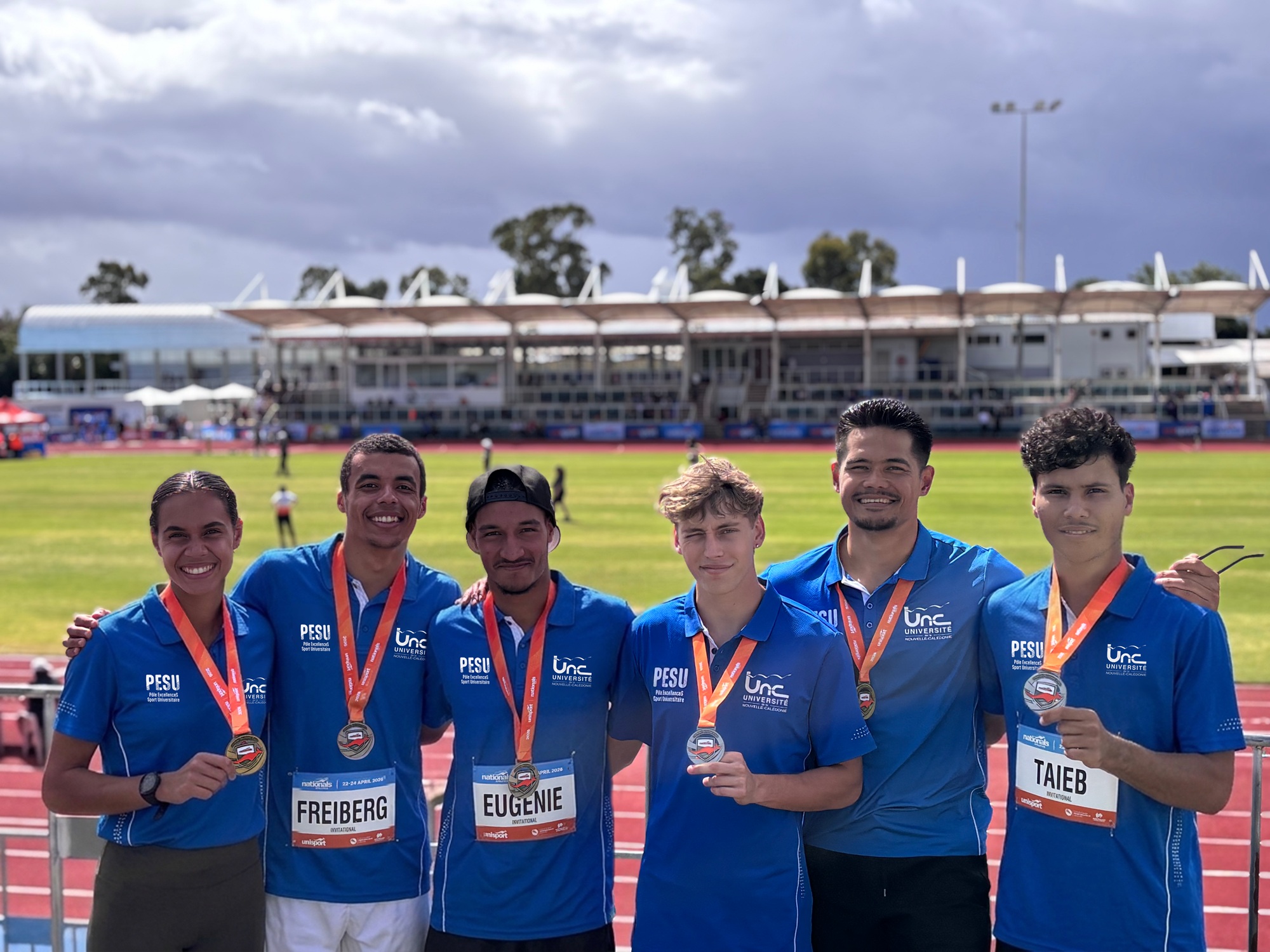
In 2026, that momentum continued with the inclusion of a team from the University of New Caledonia.
For team manager Éric Reuillard, bringing a New Caledonian university team to the Gold Coast highlighted both the competitive standard and the broader value of the event.
“These championships are another opportunity to meet a high level of competition,” he said, noting the professionalism of Australian Athletics.
Beyond performance, he highlighted the importance of connection, describing the championships as “a unique and exciting opportunity to create connections in a high-level context.”
Together, those elements of performance, opportunity, and connection reflect how UniSport Nationals Athletics continues to evolve.
Reflecting on a successful 2026 event, UniSport CEO Mark Sinderberry said:
“UniSport Nationals Athletics has not moved away from its identity as a university competition. If anything, that identity remains its foundation. For many, it is still about representing their university, competing with teammates, and being part of a shared experience.
“But for others, it has become a meaningful step within a much larger journey. And increasingly, for more athletes each year, it is able to be both.”




Don’t miss a beat, subscribe for exclusive updates, events, and insider news!
Be part of the action and follow us for the latest moments, wins, and behind-the-scenes action.










Copyright © 2026. UniSport Australia All rights reserved.


The best university Sports action from Australia – stream it live now on UniSportTV.
Watch Live