
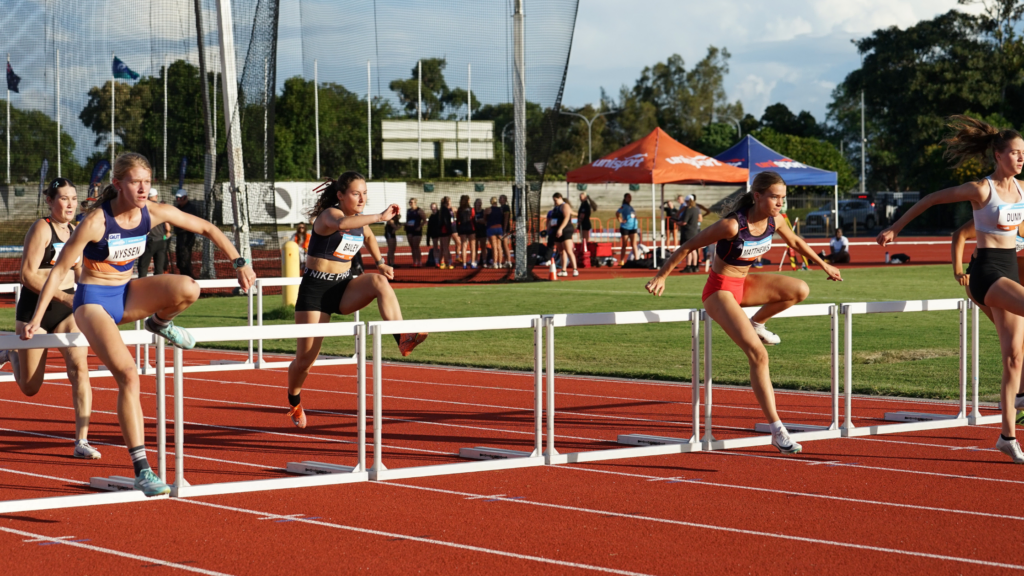
From Personal Bests to Shared Moments: Inside UniSport Nationals Athletics
The UniSport Nationals Athletics Championships (Nationals Athletics) once ...
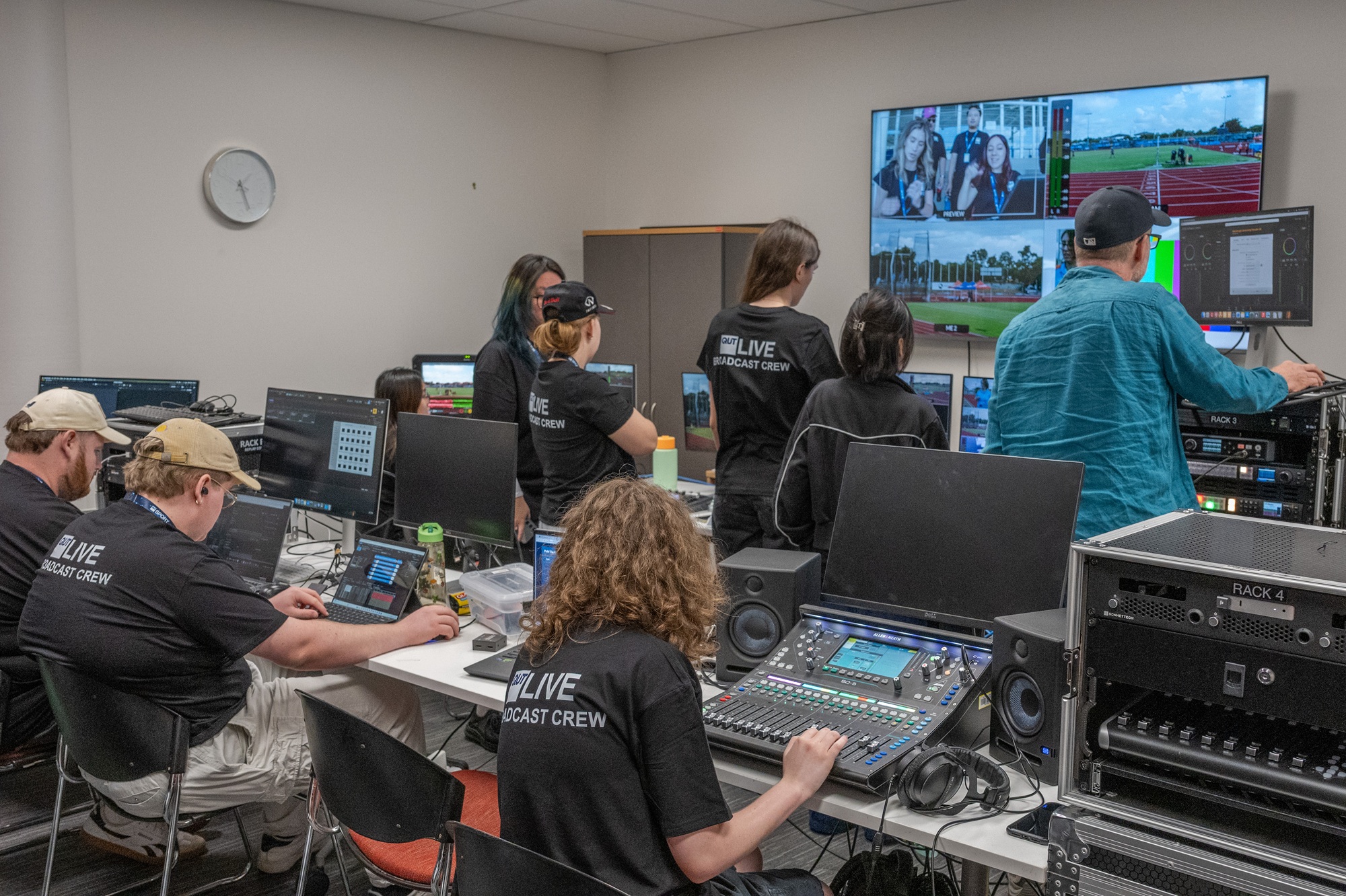
For 34 Queensland University of Technology (QUT) students, the 2026 UniSport Nationals Athletics Championships became far more than a national sporting event. It became a live classroom, where future broadcasters, producers and journalists experienced the pace, pressure and unpredictability of live sport production.
Working across a 12-camera broadcast at the Gold Coast Performance Centre, students gained hands-on industry experience in roles spanning commentary, camera operation, vision mixing, graphics, audio, production coordination and floor management, helping deliver live coverage of Australia’s premier university athletics championships on UniSportTV.
The initiative formed part of QUT’s Creative Arts Project subject within the School of Creative Arts, Film, Screen and Animation, giving students the opportunity to apply classroom learning in an authentic production environment where every decision mattered.
The partnership also highlighted the broader role university sport can play across an institution. While QUT had student-athletes competing on the track, it also had more students involved in producing the championships than competing in them, demonstrating how major sporting events can create work-integrated learning opportunities that extend well beyond participation.
Leading the project was Senior Lecturer Dr Joe Carter, who said the initiative was developed in response to the changing media landscape and growing demand for live content production.
“Sport is the bread and butter for networks all around the world because live sport is different, as you cannot replicate that experience later,” Dr Carter said.
Drawing on experience working with broadcasters including Channel 7, Dr Carter said the objective was not simply to teach technical skills, but to place students in a live production environment.
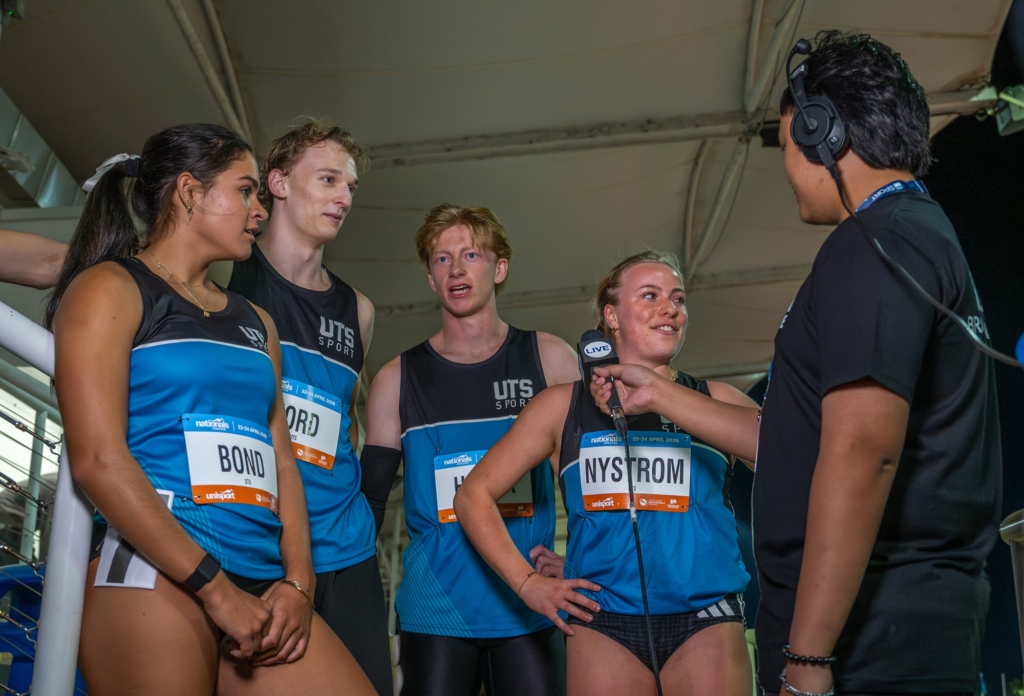
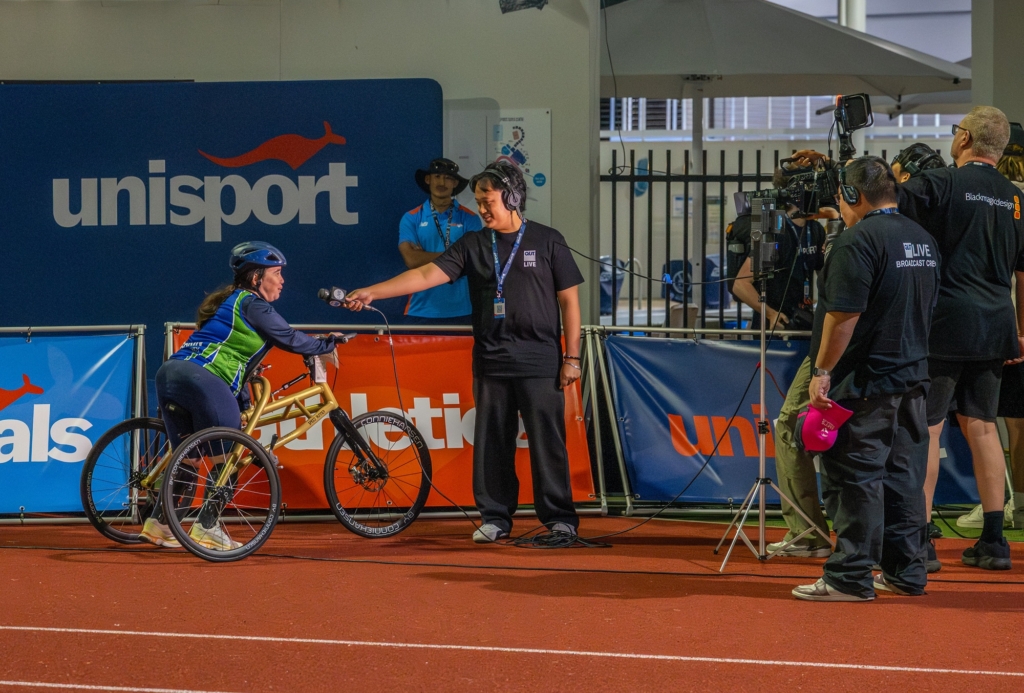
“The learning experience students take away from this is as important as anything they could do in a classroom. This isn’t a staged exercise. These are athletes, potentially future Olympians, competing at a national championship. That naturally raises the stakes and the quality bar for everybody involved.”
Students were assessed not only on technical execution, but also on their understanding of audience engagement, storytelling, teamwork and the broader objectives of live sport broadcasting.
“It is important students don’t just learn how to operate cameras or press buttons, they need to understand what audiences want from a live event and how broadcasters can help create that experience,” Dr Carter said.
Throughout the championships, students navigated changing weather conditions, evolving event schedules and the unpredictable demands of live broadcasting, experiences difficult to replicate in a traditional classroom.
Experiences like this make my degree feel relevant and give me something to work towards.
Marc-Zobel Hizola
For QUT student Ashley Cuff (Bachelor of Fine Arts), the experience transformed classroom concepts into practical application.
“Working with a client to produce a real-world broadcast seen by people across the country gave us the chance to work in a professional industry setting in new environments we weren’t familiar with,” she said.
“We were constantly having to adapt and adjust our approach depending on what was happening. Live changes in schedules and developing weather conditions meant we had to learn how to adapt quickly, work together, communicate and stay calm when things didn’t go exactly to plan.”
For fellow student Don Philip Alabata (Bachelor of Fine Arts), the experience provided an opportunity unlike anything typically available to university students.
“To be given important positions on a broadcast of the scale of the UniSport Nationals Athletics simply trumps any other experiences I’ve personally had. It’s a whole different beast doing rehearsals in the QUT TV studio than it is actually being in the grandstands watching real athletes do their thing,” he said.
Don Philip said the experience demonstrated how skills developed through creative industries study could transfer directly into live sport broadcasting.
“Film production forces you to develop skills of improvisation and thinking on your feet, which thankfully translates quite well to commentary. I’m not a journalism student, but I quickly developed the skills to conduct sideline interviews because of the adaptability and improvisation skills I had already built throughout my degree.”
For commentary student Marc-Zobel Hizola, the experience reinforced both the collaborative nature of broadcasting and the relevance of his studies beyond university.
“It showed me what the industry actually demands, and there’s so much happening behind the scenes. Even as a commentator, being involved in setup, rehearsals and pack down made me realise how important it is to understand every role, not just your own.”
“Experiences like this make my degree feel relevant and give me something to work towards.”
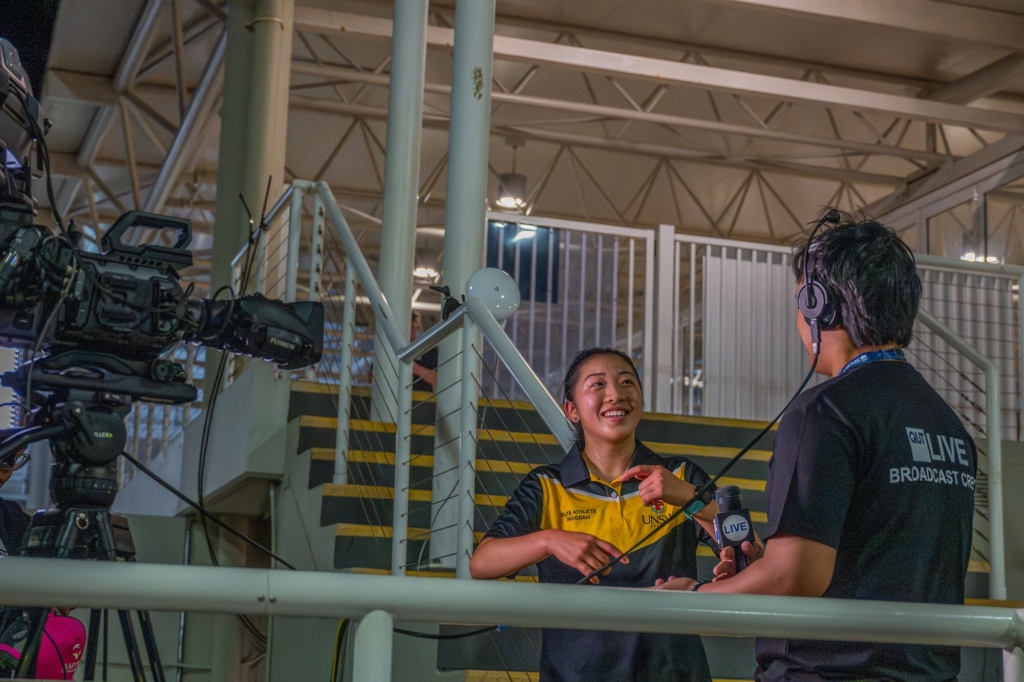
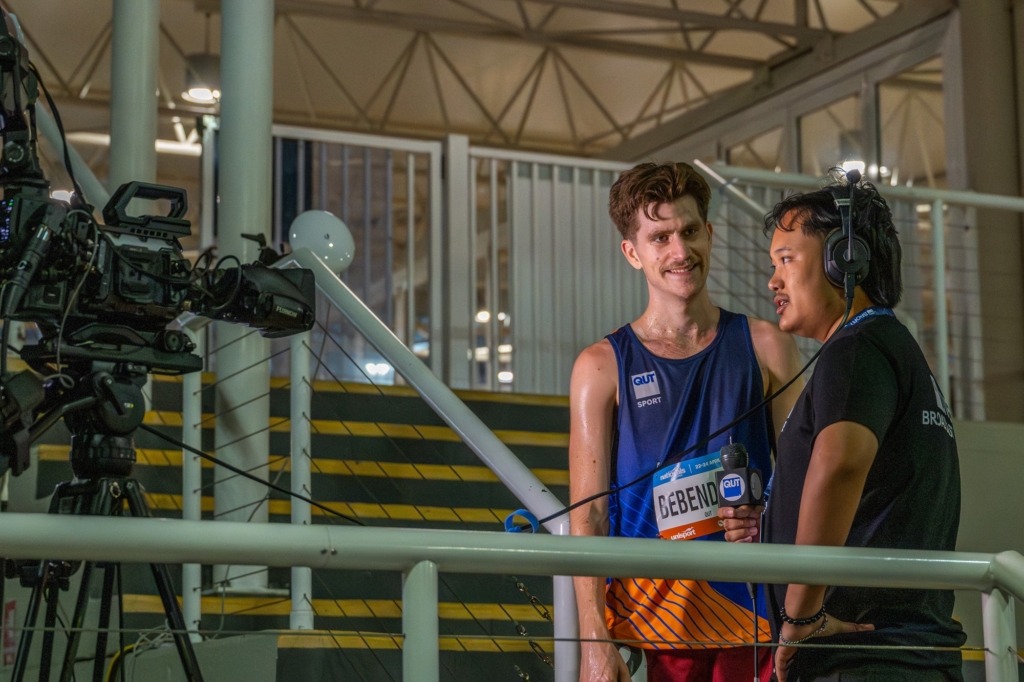
UniSport Australia CEO Mark Sinderberry said the partnership demonstrated how university sport could support universities in delivering work-integrated learning experiences alongside competition.
“University sport creates unique learning environments because there is no pause button,” Mr Sinderberry said.
“Students are working in high-pressure, collaborative environments where communication, adaptability and technical skills all come together in real time.
“Experiences like this show how sport can contribute to broader university outcomes and prepare students for their future careers, whether they’re competing on the field or building professional skills behind the scenes.”
For Dr Carter, those moments of pressure, adaptability and problem-solving were exactly what made the experience so valuable.
“I’ve always believed students are capable of more than people think,” he said.
“By the end of the week, there was a huge shift in their confidence because they realise they already had the skills, they just hadn’t been tested in a real live environment yet.”
This collaboration demonstrates how university sport can be more than a competition platform. By connecting students with real industry experiences, partnerships like this help universities create opportunities that support teaching, graduate employability and student success across campus.
Don’t miss a beat, subscribe for exclusive updates, events, and insider news!
Be part of the action and follow us for the latest moments, wins, and behind-the-scenes action.










Copyright © 2026. UniSport Australia All rights reserved.


The best university Sports action from Australia – stream it live now on UniSportTV.
Watch Live